
Momcozy M6 vs Spectra S1: Which Breast Pump Fits Your Life
Choosing between the Momcozy M6 vs Spectra S1 feels like deciding whether you need the ultimate freedom of movement or the unmatched reliability of a hospital-grade motor. It is a tough choice for any exhausted parent just trying to feed their baby without losing their mind.

The M6 is an in-bra wearable designed for the multitasking parent who needs to pump while cooking or driving. The S1 is a portable powerhouse perfect for exclusive pumping or establishing a robust milk supply from the couch.
Side-by-Side Specs Comparison
When you are bleary-eyed and overwhelmed, looking at endless product manuals is the last thing you want to do. Here is a quick breakdown of what these two machines actually offer on paper.
| Feature | Momcozy M6 | Spectra S1 |
| Price & Insurance | ~$130 (Rarely covered) | ~$200 (Often eligible) |
| Suction levels (mmHg) | Up to 295 mmHg | Up to 270 mmHg |
| Weight & Battery | 10 oz per cup, 3 hours | 3 lbs, 3 hours |
| System Type | Closed system | Closed system |
The numbers only tell part of the story, especially when it comes to how these pumps feel at 3 AM. Let us dive into what it is actually like to use them every single day.
Unboxing and Assembly
Pulling the M6 out of the box, the sleek design is impressive, but figuring out the exact flange sizing takes some trial and error. The silicone parts are soft, though aligning the motor perfectly at 2 AM can feel a bit like solving a puzzle.
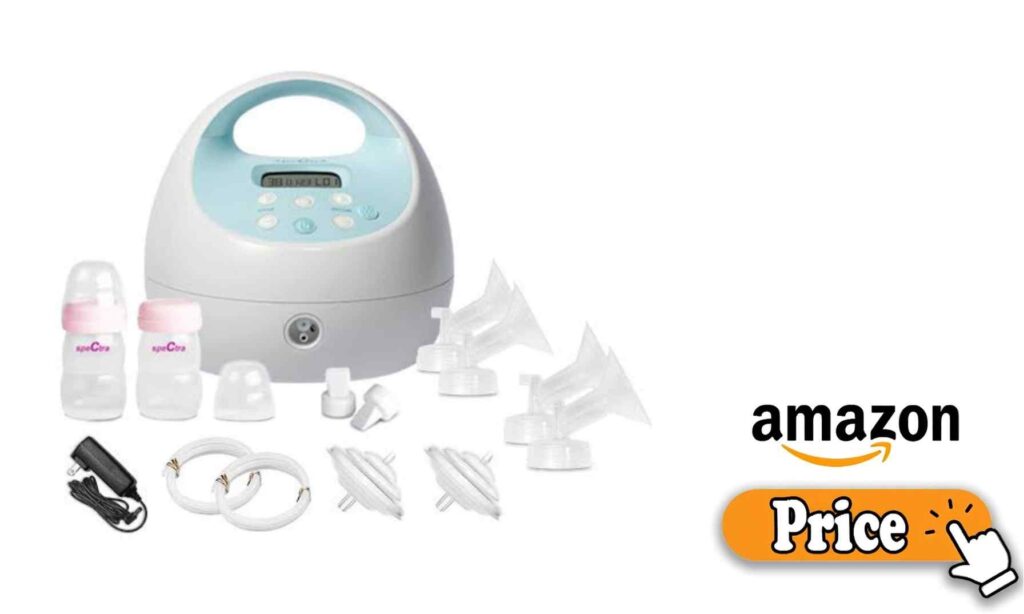
The Spectra S1 arrives looking a bit like a friendly blue bowling ball, complete with a tangle of tubing and plastic flanges. Assembly is incredibly straightforward, which is a massive relief when you are running on two hours of sleep.
Pumping Performance and Milk Expression
The S1 shines brilliantly when it comes to initiating let-down stimulation, thanks to its customizable cycle speeds. It empties the breasts completely and consistently, making it an absolute lifesaver for anyone dealing with low supply.
The M6 holds its own surprisingly well for a wearable, but milk expression can sometimes vary depending on how perfectly it sits in your bra. I found that if the wearable shifted slightly while bending over to pick up a toy, output dropped until I adjusted it.
Here is a quick look at how they compare for milk output efficiency. I measured my average session times and overall yield during my testing weeks.
| Output Metric | Momcozy M6 | Spectra S1 |
| Let-down speed | 2-3 minutes | 1-2 minutes |
| Emptying efficiency | Good, needs adjustment | Excellent, very consistent |
| Best suited for | Occasional pumping | Exclusive pumping |
Both pumps can get the job done, but the hospital-grade motor on the blue workhorse definitely provides more peace of mind. Consistency is key when you are trying to avoid dreaded clogged ducts and maintain your sanity.
Suction Performance and Comfort
Many parents are shocked that the M6 technically reaches higher suction levels (mmHg) than the blue portable unit. However, higher settings on the wearable can sometimes feel a bit sharp or pinchy if the silicone flange is not aligned perfectly.
The S1 offers a buttery smooth vibration alongside its suction, which mimics a baby’s natural rhythm much better. The plastic flanges can cause nipple pain if they are the wrong size, but finding third-party silicone inserts is incredibly easy.
Let us compare the comfort features and modes of both devices. You really need to find the right combination of speed and strength for your body.
| Comfort Feature | Momcozy M6 | Spectra S1 |
| Suction feel | Strong, slightly sharp | Smooth, vibrating |
| Pumping modes | Stimulation, Expression | Massage and Expression |
| Flange comfort | Soft silicone, in-bra | Hard plastic, external |
During one long session, one flange kept slipping on the wearable, which was a frustrating distraction. The bulky blue machine, however, stayed securely strapped into my pumping bra without moving an inch.
Milk Collection System
Pouring milk from a wearable pump can be a nerve-wracking experience when you are thoroughly exhausted. I accidentally spilled precious milk while pouring it into storage bags from the M6 cup, crying over literal spilled milk.
The S1 pumps directly into standard bottles, which makes the whole milk collection system nearly foolproof. You can screw a lid right onto the bottle or use an adapter to pump straight into storage bags without any risky transfers.
Let us look at capacity and the potential for losing your hard-earned ounces. Every single drop matters when you are building a freezer stash.
| Collection Feature | Momcozy M6 | Spectra S1 |
| Cup/Bottle Capacity | 6 oz per cup | 5 oz per bottle (included) |
| Pouring ease | Requires careful aim | Easy, direct transfer |
| Spillage risk | Moderate | Very low |
The M6 does feature a closed system to keep milk out of the motor, which is excellent for hygiene. However, the measurement markings on the wearable cups are notoriously hard to read while you are wearing them.
Cleaning, Sterilization, and Hygiene
Washing pump parts in the middle of the night is a special kind of torture for new parents. The M6 has only four parts per cup, but I have definitely had tiny duckbill valves slipping down the drain during midnight washing.
The S1 has more parts to assemble, including backflow protectors, tubing, and valves, which takes up more space on the drying rack. Thankfully, both feature a closed system, so you never have to worry about sanitizing the tubes themselves.
Here is a breakdown of the cleaning routine for both options. Keep in mind that having spare parts is absolutely essential.
| Cleaning Aspect | Momcozy M6 | Spectra S1 |
| Parts per side | 4 parts | 5 parts (plus tubing) |
| Dishwasher safe | Yes (top rack) | Yes (top rack) |
| Reassembly difficulty | Takes practice | Very simple |
Silicone membranes on both pumps need to be completely dry before reassembly, or you will lose suction. Sterilizing the parts daily can degrade the silicone faster, so stock up on replacements early.
Noise Level and Discretion
The M6 is quiet enough to wear during a Zoom meeting if you have your microphone noise cancellation turned on. However, it gives you very obvious robotic-looking breasts, so it is not completely invisible under tight clothing.
The S1 has a gentle, rhythmic hum that many babies actually find soothing like white noise. It is certainly not discreet, as you will be tethered to two large bottles protruding from your chest like torpedoes.
Let us compare how much noise and attention these devices draw. Discretion matters if you plan to pump around coworkers or family.
| Discretion Feature | Momcozy M6 | Spectra S1 |
| Motor noise | Low hum, clicking | Quiet, soothing vibration |
| Visual profile | Bulky in bra | Very obvious bottles |
| Office friendly | Yes, with loose clothes | Requires private room |
For true stealth pumping, neither is entirely invisible, but the wearable definitely wins for mobility. The blue portable is strictly for pumping when you do not mind feeling like a dairy cow in your living room.
Battery Life and Charging
Nothing induces panic quite like sitting down to pump and realizing the battery indicator is flashing red. I once forgot to recharge it before the first morning pump, and the M6 simply would not turn on.
Both pumps boast around three hours of battery life, which easily covers a full day of pumping at work. The S1 has a proprietary charger, meaning if you lose it, you are entirely out of luck until a replacement arrives.
Here is how the battery and charging situations stack up. Keep a close eye on those battery indicator bars to avoid missing a session.
| Power Feature | Momcozy M6 | Spectra S1 |
| Battery life | ~3 hours (5-6 sessions) | ~3 hours (5-6 sessions) |
| Charging port | USB-C | Proprietary wall plug |
| Pump while charging | Yes | Yes |
The M6 uses a standard USB-C cable, making it incredibly convenient to charge in the car or with a power bank. Both batteries will slowly degrade over time if you are an exclusive pumper using them heavily every single day.
The Wearable Experience
The M6 fits surprisingly well inside a stretchy nursing bra, provided you tighten the straps enough to maintain a good seal. The weight on the chest is noticeable but manageable, though bending over to check the oven is risky.
Visibility under clothes heavily depends on your wardrobe; baggy sweaters are your best friend if you want to hide the cups. The touch-button accessibility through a shirt is decent, but you often have to blindly guess which button you are pressing.
The fear of leaking is very real when you are carrying your baby while wearing the cups. A sudden kick from a toddler can easily break the suction seal and cause milk to seep into your bra.
Real-Life Daily Scenarios
For middle-of-the-night sessions, the S1 is usually the crowd favorite despite being tethered to a bulky base. It features a built-in nightlight, though the bright display woke the baby during overnight pumping once when I accidentally faced it toward the crib.
The M6 is an absolute champion for the morning commute or tossing in a bag for an airport trip. Pumping while driving to work without any tubes getting caught in the steering wheel or seatbelt is a total game-changer.
When doing household chores, the wearable lets you load the dishwasher, as long as you do not bend over too far. The portable blue pump is easy to carry around the house by its handle, but you are largely stuck sitting down.
Insurance, Price, and Value
The S1 is a staple on most insurance plans, usually requiring a small upgrade fee of around $30 to $50. This makes it an incredibly cost-effective choice for a primary, hospital-grade motor that will last through multiple babies.
Wearables like the M6 are rarely covered fully by insurance, meaning you will likely pay the $130 out of pocket. However, it is fully eligible for FSA/HSA funds, which softens the financial blow considerably for many families.
When calculating value, do not forget to factor in the replacement parts you will need every few months. Duckbill valves and backflow protectors add up quickly, especially if you have an oversupply and pump constantly.
Long-Term Ownership
The S1 motor is practically indestructible, easily clocking over 1,500 hours of heavy-duty pumping without losing any strength. It is the gold standard for mothers who pump exclusively and need a device that will not quit after three months.
The M6 motor is solid, but wearables generally have a shorter lifespan when subjected to rigorous daily use. Milk residue staining on the silicone flanges is inevitable, even with diligent cleaning and sterilizing.
Tubing durability on the blue pump is great, but condensation can build up inside, requiring you to run the motor dry. Ultimately, a traditional motor will almost always outlast a tiny wearable motor when pushed to the absolute limit.
Who Should Buy Which?
Making the final call really depends on how you plan to feed your baby and what your daily routine demands. Here is the bottom line on who benefits most from each device.
Buy Momcozy M6 if:
- You pump occasionally while commuting or working at a desk.
- You need to chase a toddler while expressing milk.
- You want standard USB-C charging for easy travel.
Buy Spectra S1 if:
- You are exclusive pumping and need unmatched durability.
- You are trying to increase a low supply safely.
- You prefer pumping directly into storage bottles with zero transfer risk.
Consider Neither If:
- You only pump once a week (a manual pump is cheaper).
- You want a truly invisible wearable (they are all bulky).
- You have severe wrist fatigue (consider a lighter motor setup).
Final Verdict: Momcozy M6 vs Spectra S1
If you can only afford one pump to carry you through your entire breastfeeding journey, the blue portable powerhouse is the safest investment. Its reliability, gentle vibration, and consistent emptying capability make it the undisputed champion for establishing milk supply.
However, if you already have a reliable primary wall pump, adding the wearable to your routine brings incredible sanity and freedom. Ultimately, the best choice is the one that causes the least amount of stress during those difficult, sleep-deprived months.