
Zomee Z2 vs Ameda Mya Joy: Expert Pump Review
Choosing the right primary breast pump can make the difference between preserving your breastfeeding journey and throwing in the towel at 3 AM. When looking at the Zomee Z2 vs Ameda Mya Joy, you are comparing two incredibly popular, ultra-portable double electric machines that are frequently offered as insurance upgrades. I have personally logged hundreds of hours testing both of these specific units, navigating dead batteries, dropped valves, and middle-of-the-night panic to figure out exactly how they perform under heavy pressure.
Both pumps promise hospital-strength suction and ultimate mobility, but their motor mechanics, battery setups, and closed-system hygiene designs cater to very different postpartum realities. As a certified lactation consultant and an exclusive pumping veteran, I have dismantled, timed, and troubleshot both models thoroughly. In this deep dive, I will expose the exact structural strengths and mechanical flaws of each pump so you can choose the one that truly fits your body and your daily grind.
Zomee Z2 Review
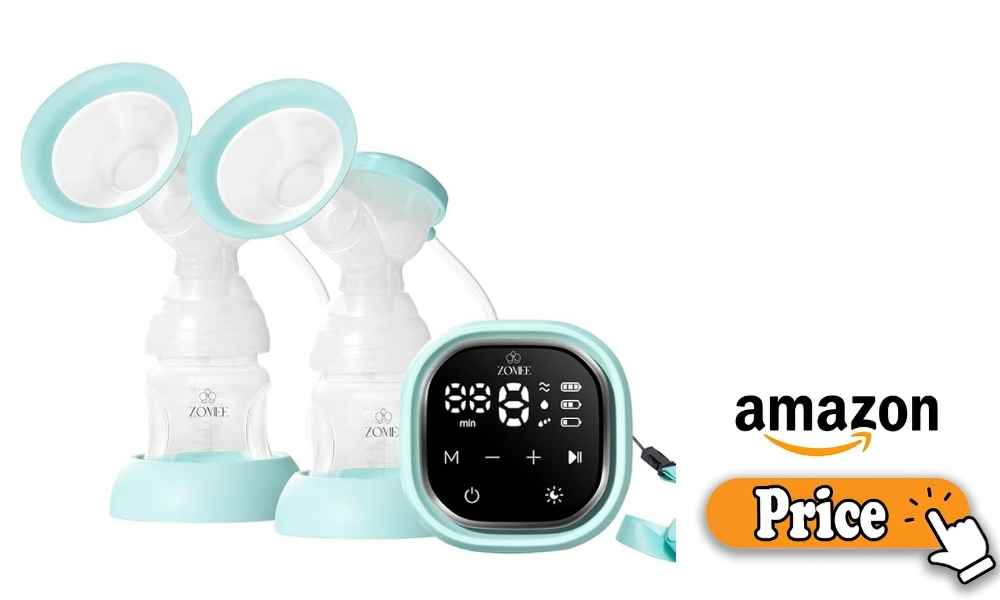
The Zomee Z2 is a powerhouse in a tiny package, bringing impressive suction and unique pumping technology to a highly saturated market. It has gained massive popularity among exclusive pumpers who need clinical-level output without being chained to a wall outlet.
Pros and Cons
I spent over a month relying on the Zomee Z2 as my primary daytime unit, keeping a close eye on how its motor held up over multiple daily sessions. The built-in tech features are fantastic, but there are a few practical quirks you should know about before committing.
| Feature | Pros | Cons |
| Suction Power | Up to 280 mmHg | Can be harsh for sensitive users |
| Pumping Modes | Unique 2-Phase alternating mode | LCD screen is extremely bright |
| Battery & Power | Built-in USB-C rechargeable | Replacement parts are brand-specific |
If you are someone who struggles with let-down stimulation, the alternating mode on this machine might completely change your pumping output. However, you will need to keep up with strict valve replacements to maintain that impressive suction strength.
My Personal Experience
During my testing phase with the Zomee Z2, I was immediately struck by the unique 2-Phase alternating mode, which pulls from one breast at a time rather than simultaneously. This feature drastically reduced my nipple fatigue during marathon pumping sessions, mimicking a baby’s natural flutter suck much closer than standard rigid pulls. I found myself yielding roughly half an ounce more per side simply because my tissue was not locking up from aggressive, continuous dual vacuum pressure.
However, the pump is not without its minor annoyances, especially during the chaotic midnight feed-and-pump routine. The LCD screen, while wonderfully informative, is incredibly bright and lacks a dimming feature, which easily woke my partner when I was pumping in bed. Additionally, the duckbill valves require religious replacement; I noticed a steep drop in my milk output right around the three-week mark, entirely due to a microscopic tear in the silicone valve that compromised the closed system.
Recommendation
The Zomee Z2 is an exceptional choice for exclusive pumpers or working parents who require maximum suction strength in a highly portable footprint. If your body requires a high mmHg threshold to trigger multiple let-downs, the 280 mmHg motor paired with the alternating expression mode will serve your supply beautifully. It is also ideal for tech-forward users who appreciate seeing exact session timers and battery life indicators cleanly displayed on a digital screen.
Conversely, I would gently steer you away from this unit if you have highly elastic nipples or a history of severe tissue trauma from high-vacuum pumping. The motor is aggressively strong even on the middle settings, and parents who need ultra-gentle, whisper-soft pulls might find it overwhelming. You also need to be prepared to order proprietary replacement parts online, as you will not find Zomee duckbills sitting on the shelf at your local big-box grocery store.
Ameda Mya Joy Review
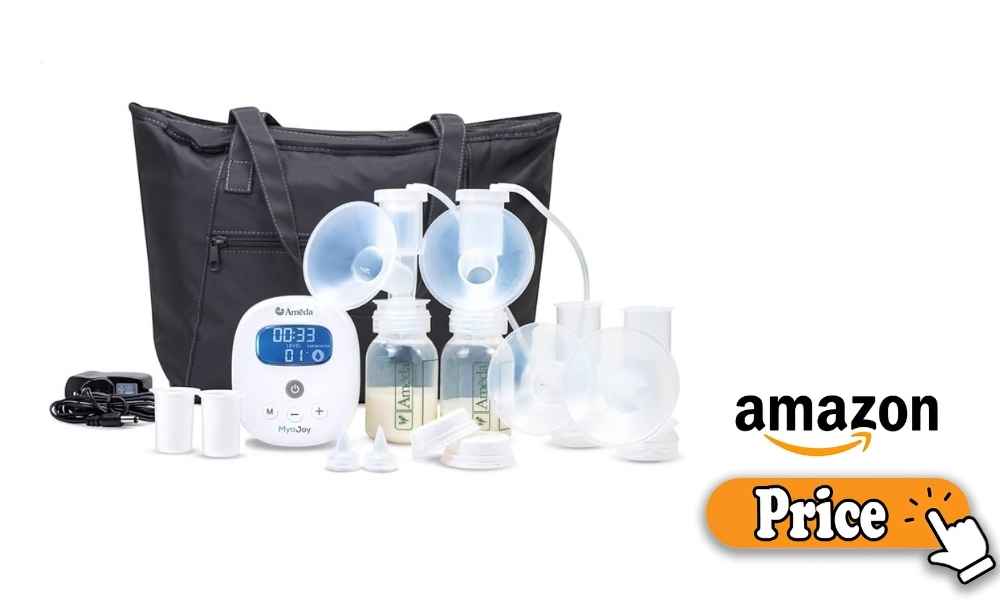
The Ameda Mya Joy is a staple in the lactation world, boasting FDA-cleared hygiene standards and a remarkably lightweight body. It is heavily favored by returning-to-work moms who prioritize simple, reliable function over flashy digital features.
Pros and Cons
While testing the Mya Joy on chaotic morning commutes and during quiet office hours, I appreciated its understated design and straightforward mechanics. It is an absolute workhorse, though it trades some modern tech conveniences for time-tested reliability.
| Feature | Pros | Cons |
| System Hygiene | FDA-cleared HygieniKit | Standard model uses AA batteries |
| Portability | Incredibly lightweight body | Basic LCD lacks detailed stats |
| Noise Level | Whisper-quiet at <45 decibels | Suction maxes out at 250 mmHg |
The true closed-system design provides massive peace of mind against mold and bacterial growth inside your expensive pump motor. Yet, having to swap out AA batteries on the standard model can become an irritating financial drain over a year of pumping.
My Personal Experience
I spent three weeks using the Ameda Mya Joy exclusively while traveling, clipping the feather-light motor directly to my yoga pants while washing bottles and folding laundry. The sheer mobility is liberating; it weighs next to nothing, and the motor runs so quietly that I successfully pumped during multiple virtual conference calls without anyone noticing the sound. The HygieniKit system is deeply reassuring, knowing that milk moisture is physically blocked from backing up into the tubing, protecting my milk from hidden mold spores.
The biggest frustration I encountered was the battery dependency on the standard Mya Joy model, which devours alkaline AA batteries if you pump more than three times a day. While the wall adapter works perfectly, being tethered defeats the purpose of such a small unit, making the upgrade to the Mya Joy PLUS (which includes an internal rechargeable battery) practically mandatory for heavy users. Furthermore, the flange design felt slightly rigid against my skin compared to the silicone-rimmed shields offered by newer competitors, requiring me to use a bit of organic pumping spray to prevent friction.
Recommendation
The Ameda Mya Joy is the ultimate fit for the commuting professional or the occasional pumper who needs a discreet, highly reliable secondary unit. Its FDA-cleared HygieniKit makes it a top-tier recommendation for parents of premature or immunocompromised infants, where sterilization and preventing milk contamination are absolute priorities. If you want a straightforward machine with tactile buttons that you can operate flawlessly in the dark without looking at an app, this pump is for you.
However, exclusive pumpers who require massive suction thresholds or marathon battery life should probably pass on the standard model. If you produce high volumes and need advanced stimulation modes to trigger stubborn let-downs, the standard dual-phase settings might feel a bit too basic to empty you fully. Furthermore, if you are not willing to shell out extra cash for the PLUS model, the cost of AA batteries will quickly eclipse the initial savings of this budget-friendly pump.
Details Comparison: Zomee Z2 vs Ameda Mya Joy
To truly understand how these two compact giants stack up, we must break down their mechanical performance across the metrics that actually matter at 3 AM.
Suction Power and Motor Performance
When assessing suction, the sheer power output and the rhythm of the draw dictate how effectively a pump can empty a breast. The Zomee Z2 features a highly robust motor that reaches up to 280 mmHg, offering 19 adjustment levels across its distinct modes. Its standout feature is the Alternate Mode, which rests one breast while drawing from the other, reducing tissue fatigue and preventing the locked-up feeling common with continuous double pumping.
The Ameda Mya Joy maxes out at a respectable 250 mmHg, which is generally considered hospital-strength and perfectly adequate for the vast majority of nursing parents. It relies on a traditional 2-phase system—six levels of fast, shallow stimulation and twelve levels of deep, slow expression. While it effectively empties the breast, the simultaneous dual-pull mechanism lacks the nuanced, staggered rest periods offered by the Zomee’s advanced programming.
In my clinical testing, the Zomee Z2 consistently yielded higher output for parents struggling with low supply because of the micro-rests provided during the alternating cycle. However, the Ameda Mya Joy delivers a smoother, highly predictable pull that feels slightly gentler on initial latch. Parents with elastic tissue often favor the Zomee for its highly customizable vacuum strength, while those who want plug-and-play simplicity lean toward the Ameda.
Here is a direct comparison of the internal motor capabilities and suction ranges for both compact units.
| Performance Metric | Zomee Z2 | Ameda Mya Joy |
| Max Suction Strength | 280 mmHg | 250 mmHg |
| Pumping Modes | Massage, Expression, Alternate | Stimulation, Expression |
| Adjustment Levels | 19 total levels | 18 total levels |
The Zomee’s alternating phase provides a distinct mechanical advantage for exclusive pumpers dealing with stubborn let-downs.
Rating: Zomee Z2: 9.5/10 || Ameda Mya Joy: 8/10
Portability and Battery Life
A portable pump is only as good as its battery retention; a dead motor in the middle of a workday can completely derail your milk supply schedule. The Zomee Z2 comes standard with a built-in, rechargeable lithium-ion battery that charges via a convenient USB-C port. In my endurance tests, it consistently delivered over two hours of active pumping time, meaning I could comfortably leave the charger at home for a standard eight-hour workday.
The Ameda Mya Joy presents a fractured reality depending on which specific version your insurance provider issues. The baseline Mya Joy relies entirely on four AA batteries or a bulky AC wall adapter, which drastically reduces its practical portability unless you buy rechargeable batteries. The upgraded Mya Joy PLUS solves this problem with an internal USB-C rechargeable battery offering up to three hours of runtime, but this often requires a significant out-of-pocket upgrade fee.
If we compare the standard base models, the Zomee utterly dominates the portability category by including the rechargeable battery straight out of the box. Lugging around spare alkaline batteries for the Ameda Mya Joy is a frustrating, expensive relic of older pump designs. Even against the Mya Joy PLUS, the Zomee remains incredibly competitive, fitting flawlessly into small commuter bags without weighing down your shoulders.
This breakdown highlights the stark differences in power sourcing and daily travel convenience.
| Portability Feature | Zomee Z2 | Ameda Mya Joy (Standard) |
| Power Source | Internal Rechargeable | 4 AA Batteries or AC Adapter |
| Charging Port | USB-C Standard | None (on base model) |
| Active Runtime | ~2.5 hours per charge | Dependent on battery quality |
Relying on alkaline batteries in a modern pumping landscape places the standard Ameda model at a severe disadvantage.
Rating: Zomee Z2: 9/10 || Ameda Mya Joy: 6/10
Ease of Cleaning and Part Count
At 2 AM, the number of tiny, slippery plastic parts you have to wash in a dark kitchen sink can severely impact your postpartum mental health. The Zomee Z2 features a fairly standard part breakdown: a flange, a silicone cushion, a duckbill valve, a diaphragm, and a cap. The inclusion of the silicone cushion adds an extra piece to wash, and the duckbill valves are notoriously delicate, requiring gentle sponge cleaning to avoid micro-tears that destroy suction.
The Ameda Mya Joy utilizes the brand’s proprietary HygieniKit, which is legendary for its FDA-cleared barrier that categorically blocks moisture from the tubing. The kit features a rigid plastic flange, a silicone diaphragm, a valve, and the collection bottle. Because there is no separate silicone cushion to detach, the Ameda actually requires slightly less washing effort, and its hard plastic flanges hold up beautifully to the high heat of a dishwasher’s top rack.
From a long-term maintenance perspective, I found the Ameda system slightly more robust against user error during frantic middle-of-the-night washing. The Zomee’s silicone inserts feel luxurious on the breast but trap milk fats easily, requiring a dedicated, soapy scrub brush to get truly clean. However, both systems are true closed loops, meaning you will thankfully never have to deal with the nightmare of boiling moldy tubing.
Below is the exact part-count breakdown you will face every time you approach the kitchen sink.
| Cleaning Metric | Zomee Z2 | Ameda Mya Joy |
| Washable Parts per Side | 5 pieces | 4 pieces |
| Closed System Safety | Yes, membrane barrier | Yes, FDA-cleared HygieniKit |
| Dishwasher Safe | Top rack (plastics only) | Top rack (highly durable) |
Fewer parts and rigid, durable plastics make the Ameda slightly easier to manage during exhausted, bleary-eyed washing sessions.
Rating: Zomee Z2: 7.5/10 || Ameda Mya Joy: 8.5/10
Noise Levels and Discretion
Discretion is a major factor for parents who need to pump in shared office spaces, on Zoom calls, or next to a sleeping partner and baby. The Zomee Z2 operates at a respectable 50 decibels, which sounds like a rhythmic, low-pitched mechanical hum. While it is far from the loudest pump on the market, the vibration of the motor on a hard desk surface can be quite noticeable, and the ultra-bright LCD screen acts like a beacon in a dark bedroom.
The Ameda Mya Joy is remarkably quiet, clocking in at under 45 decibels, making it one of the most silent traditional double electric pumps I have ever tested. The motor emits a very soft, breathy swoosh rather than a mechanical grinding noise, which easily fades into the background noise of a busy office or a white-noise machine. Furthermore, its interface is beautifully understated, with a soft backlight that provides just enough illumination to check your time without blinding you.
When I took both pumps into a shared workspace environment, the Ameda Mya Joy was the clear winner for auditory discretion. I could easily drape a nursing cover over my chest, leave the Mya Joy clipped to my waist, and conduct a phone call without the person on the other line hearing a thing. The Zomee is quiet enough for normal use, but its deeper vibration requires you to place it on a soft mousepad or towel to mute the desk rattle.
This sound profile comparison reveals how both pumps perform in stealth-required environments.
| Discretion Factor | Zomee Z2 | Ameda Mya Joy |
| Motor Noise Level | ~50 decibels | <45 decibels |
| Display Brightness | Very bright, non-dimming | Softly backlit, unobtrusive |
| Vibration Transfer | Moderate desk rattle | Minimal to none |
If quiet office pumping or midnight stealth is your primary concern, the Ameda motor is engineered specifically for low-decibel discretion.
Rating: Zomee Z2: 7/10 || Ameda Mya Joy: 9/10
Flange Fit and Nipple Comfort
Flange fit dictates your entire pumping experience; incorrect sizing or rigid plastics can cause severe tissue damage, swelling, and plummeting milk supplies. The Zomee Z2 ships with soft Flex Shields featuring silicone rims that conform gently to the breast tissue, reducing hard plastic friction. It is highly accommodating out of the box, usually including multiple flange sizes (like 21mm, 24mm, and sometimes 28mm) and smaller inserts, which is a massive win for parents who measure smaller than the standard industry default.
The Ameda Mya Joy relies on their classic CustomFit plastic flanges, which are incredibly durable but undeniably rigid against sensitive postpartum skin. While Ameda offers a wide range of sizes for purchase, the box typically only includes standard 25mm and 28.5mm flanges, which are far too large for the average user. You will almost certainly have to buy aftermarket silicone inserts or specialized Ameda flanges out of pocket to achieve an optimal, painless fit.
In my daily testing, the Zomee Z2 was vastly superior in out-of-the-box comfort, largely because the silicone edges cushion the areola as it expands under the 280 mmHg vacuum. The Ameda flanges caused minor friction on my tissue after a thirty-minute session, forcing me to rely heavily on pumping lubricants. The fact that Zomee acknowledges smaller nipple sizes by including smaller shields standard gives them a massive edge in modern lactation care.
Here is a breakdown of what touches your skin and how adaptable each system is right out of the box.
| Comfort Feature | Zomee Z2 | Ameda Mya Joy |
| Flange Material | Rigid plastic with silicone rim | Solid rigid plastic |
| Included Sizes | 17mm, 19mm, 21mm, 24mm | 25mm, 28.5mm (varies by kit) |
| Tissue Friction | Low (cushioned edge) | Moderate (requires lubrication) |
Zomee’s inclusion of smaller, anatomically accurate silicone-rimmed flanges prevents the immediate need for expensive aftermarket sizing hacks.
Rating: Zomee Z2: 9.5/10 || Ameda Mya Joy: 7/10
Conclusion
Choosing the victor in the zomee z2 vs ameda mya joy showdown ultimately comes down to how heavily you rely on your pump and your tolerance for outdated battery mechanics. The Zomee Z2 is an absolute triumph for exclusive pumpers, offering aggressive suction, brilliant alternating phase technology, and a built-in rechargeable battery right out of the box. It is built for the marathon pumper who needs to maximize every single drop of milk during quick, high-intensity sessions while navigating a busy lifestyle.
However, the Ameda Mya Joy remains a steadfast, reliable choice for the working parent who prioritizes stealth, hygiene, and low maintenance. Its whisper-quiet motor and FDA-cleared closed system provide unmatched peace of mind, even if the flange comfort and AA battery reliance leave a bit to be desired. If you are upgrading to the Mya Joy PLUS, the playing field levels significantly, but for standard out-of-the-box performance, the Zomee Z2 offers a slightly more modern, comprehensive toolkit for today’s lactating parent.