
Can you use Clorox wipes on quartz? The safest answer is: you usually can in a pinch, but they should not be your everyday quartz cleaner unless your countertop maker allows them. A single wipe will not often ruin a quartz surface, yet repeated use may leave a film, dull the finish, or affect the resin over time.
Quartz counters are strong, but they are not indestructible. They contain natural quartz mixed with resins and color materials. Those resins can react poorly to harsh chemicals, strong acids, solvents, or long chemical contact. For daily care, warm water, a soft cloth, and a small amount of mild dish soap are the better choice.

Can You Use Clorox Wipes on Quartz?
Many homeowners use Clorox wipes to clean kitchen and bathroom surfaces. The wipes are handy after a meal, a spill, or a messy cooking job. They can also help remove germs from hard, nonporous surfaces.
Still, “safe for hard surfaces” does not always mean “approved for every quartz brand.” Quartz makers often give their own care rules. Some advise against bleach-based products, disinfecting wipes, and strong cleaners. Others may allow certain disinfectants for short-term use.
The best answer depends on three things: the exact Clorox wipe formula, the brand of quartz, and how often you use the wipes. Always check both labels before making disinfecting wipes part of your cleaning routine.
In most homes, an occasional Clorox wipe used as directed is unlikely to cause instant damage to a sealed quartz counter. But routine use is not the best care plan. Use a mild cleaner for normal dirt, and reserve disinfecting wipes for times when disinfection is truly needed.

Why Quartz Needs Gentle Care
Quartz countertops are engineered stone surfaces. They are made from crushed quartz held together with polymer resins and pigments. This gives them a smooth, sealed surface with low water absorption.
That smooth surface makes quartz easy to wipe clean. It also means dirt and germs do not soak in as easily as they can with some natural stones. However, the resin portion can be more sensitive to harsh chemicals than the quartz mineral itself.
Think of the counter as a strong shell with a less chemical-resistant binder. A cleaner may not harm the quartz particles, but it can still affect the resin, polish, or color layer. Damage may show as a dull spot, haze, yellowing, or a sticky film.
Heat can also harm quartz. Hot pans, curling irons, and small appliances may cause marks. Strong chemicals and long exposure can create a different type of problem. Good care avoids both extremes.

What Is in Clorox Disinfecting Wipes?
Clorox makes more than one type of wipe. The ingredients can vary by product, scent, market, and formula. That is why the front label alone does not tell you whether a wipe is suitable for quartz.
Many disinfecting wipes use quaternary ammonium compounds, often called quats. These ingredients help kill many germs on hard surfaces when the surface stays wet for the contact time listed on the label.
Some formulas may also contain fragrance, cleaning agents, preservatives, water, or other ingredients. Certain Clorox products may contain bleach, while many Clorox Disinfecting Wipes do not use bleach as their active ingredient. Never assume that all Clorox wipes have the same formula.
A wipe can also leave behind surfactants, fragrance, or disinfectant residue. This residue may feel tacky or look cloudy, especially when the counter is wiped often and not rinsed. The issue may be buildup rather than permanent damage.
Read the product label and the safety data for the exact wipe. If the quartz brand says to avoid that active ingredient, choose another cleaner.

What Does the Quartz Manufacturer Say?
The quartz manufacturer’s care guide should be your main source. Brands such as Caesarstone, Cambria, Silestone, MSI, and LG Hausys may have different rules. Their advice can also change as product lines change.
Some manufacturers say to use mild soap and water for daily cleaning. Many warn against bleach, oven cleaner, drain cleaner, paint remover, strong solvents, and abrasive powders. Some also advise against routine use of disinfecting wipes.
A manufacturer may approve a particular disinfectant but still require a rinse with clean water. Another may recommend a pH-neutral cleaner instead. A third may say that certain products are not covered by its warranty.
Find the model or brand name if you know it. Look for the care and maintenance page on the maker’s official website. If the information is unclear, contact the maker or installer before using a new chemical on the whole counter.
A warranty does not always cover chemical damage. A product may look fine after one use but develop a change after months of repeated exposure. Following the care guide helps protect both the finish and your warranty.

Is Quartz the Same as Quartzite?
No. Quartz and quartzite are different materials. The names sound alike, but their care needs are not identical.
Quartz is engineered stone. It contains natural quartz particles mixed with resins. Quartzite is a natural stone formed from sandstone under heat and pressure. Quartzite often needs sealing, while quartz is usually nonporous and does not need routine sealing.
A cleaner made for one surface may not be right for the other. Stone cleaners, acidic cleaners, and sealers can work in different ways. Do not use a quartzite care guide as a substitute for a quartz care guide.
Also, do not confuse either surface with laminate, granite, marble, solid surface, or porcelain. Each material has its own limits. If you are not sure what you have, ask the installer or look at your purchase papers.
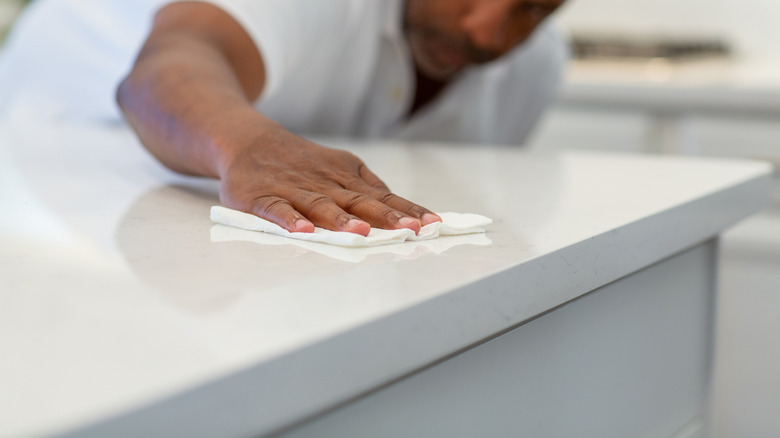
When Clorox Wipes May Be Reasonable
A Clorox wipe may be useful after contact with raw meat, a stomach bug, or another situation where you want to reduce germs on a hard surface. It may also help when you need a quick clean while caring for a child or managing a busy home.
Use the wipe only if the product label allows use on the surface. Follow the label’s wet contact time. A quick swipe that dries in a few seconds may clean visible dirt, but it may not disinfect.
Use enough wipes to keep the area wet for the full stated time. Then follow the quartz maker’s instructions. If the care guide says to rinse after disinfecting, wipe the surface with clean water and dry it with a soft cloth.
Do not use a disinfecting wipe on a hot counter. Let the surface cool first. Remove crumbs, grease, and heavy soil before disinfecting, since dirt can reduce the cleaner’s contact with the surface.
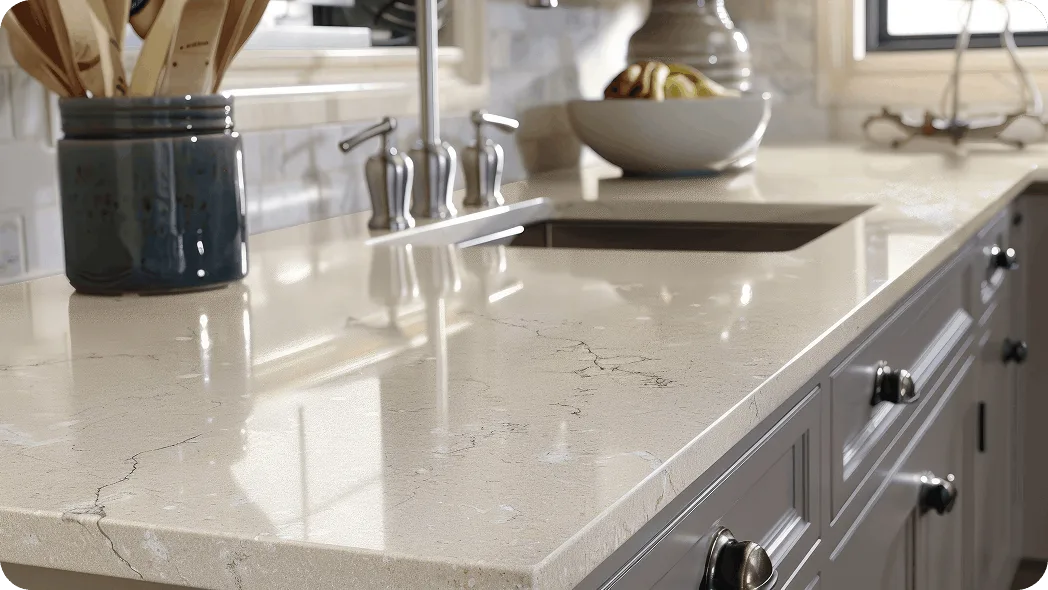
When You Should Avoid Clorox Wipes
Avoid Clorox wipes if your quartz manufacturer says not to use disinfectants or chemical wipes. The same applies when the product label does not list your surface as an approved use.
Do not use wipes on a damaged, cracked, chipped, or poorly repaired counter without professional advice. A crack or open seam can trap liquid. Chemical contact may also make a weak area harder to clean.
Avoid letting a wet wipe sit on the counter. Do not place a used wipe under a small appliance, bowl, cutting board, or container. Trapped moisture and chemicals can stay in contact with the surface for far longer than the label intends.
Do not mix Clorox wipes with other cleaners. Never combine bleach products with ammonia, acids, vinegar, or other chemicals. Even if the counter looks clean, mixing products can create dangerous fumes.
The Best Daily Cleaner for Quartz
For daily cleaning, use warm water and a soft microfiber cloth. If the surface has grease or food film, add a small amount of mild dish soap. Wipe the counter, then remove soap with a clean damp cloth.
Dry the surface after cleaning. Drying helps prevent water marks, streaks, and cleaner film. It also gives you a chance to notice sticky spots or spills before they harden.
A pH-neutral stone cleaner may be another option. Check that it is made for engineered quartz, not only for natural stone. Avoid products with wax, polish, heavy fragrance, or a strong solvent unless the quartz maker approves them.
You do not need a powerful cleaner for every crumb. Using the mildest product that works is a simple way to protect the finish.
How to Use a Clorox Wipe More Safely on Quartz
If you decide to use a Clorox wipe, read the label first. Check the active ingredient, approved surface types, wet contact time, and any rinse instructions. Then test the product in a hidden spot.
A small test can reveal streaking, tackiness, color change, or dullness. Wait until the test area is fully dry before judging it. Some residue is hard to see while the counter is wet.
Use a fresh wipe and make one controlled pass over the area. Do not scrub hard. If the surface needs more cleaning, use a second wipe rather than pressing a dry wipe across it.
These steps can reduce risk:
- Remove food, crumbs, and grease.
- Let the quartz cool to room temperature.
- Check the Clorox label and quartz care guide.
- Test the wipe on a hidden area.
- Wipe the target area without hard scrubbing.
- Keep the surface wet for the label’s contact time if disinfecting.
- Rinse with a clean damp cloth when the care guide says to do so.
- Dry with a soft, clean towel.
The goal is not to leave chemical residue on the counter. It is to use the product for its intended task, then remove what the quartz maker says to remove.
Do You Need to Rinse Quartz After Using Clorox Wipes?
Rinsing is often a wise step, but the product label and quartz care guide come first. Some disinfectant labels say to rinse food-contact surfaces after use. A kitchen counter is commonly treated as a food-contact area, especially if you prepare food directly on it.
Even when rinsing is not required, a clean damp cloth can remove leftover film. Follow with a dry microfiber cloth. This can help prevent a cloudy look and reduce repeated chemical contact.
Do not flood the counter. Quartz is low in absorption, but water can still enter seams, edges, backsplashes, or areas around a sink. Use a damp cloth rather than pouring water across the surface.
If you use the counter for food, do not place food directly on a surface with wet disinfectant residue. Wait until the label’s directions are complete, rinse if needed, and let the counter dry.
What If Clorox Wipes Leave a Film?
A film can come from disinfectant ingredients, fragrance, soap, grease, or several layers of cleaner. It may feel sticky, look hazy, or make the counter seem dull.
Start with a clean microfiber cloth dampened with warm water. Wipe a small area, rinse the cloth often, and dry the surface. You may need several passes if the residue has built up.
If water does not remove the film, use a mild dish soap solution. Apply it to the cloth rather than pouring it on the counter. Wipe, rinse with clean water, and dry.
Do not reach for a scouring pad, razor blade, abrasive cream, or strong solvent. These may scratch the finish or create a larger dull area. If the film remains, contact the quartz maker or a qualified stone-care professional.
Can Clorox Wipes Damage Quartz?
They can cause problems in some cases, but the risk depends on the formula, exposure time, surface condition, and frequency of use. A one-time wipe may leave no visible mark. Regular use can be a different story.
Possible problems include streaks, residue, loss of shine, discoloration, or a change in the resin surface. These results are not guaranteed. They are reasons to use caution and follow the maker’s care advice.
Bleach deserves special care. Some Clorox products contain bleach, while many disinfecting wipes do not. Quartz brands often warn against bleach or limit how it may be used. Check the exact label instead of guessing from the Clorox name.
Strong acids and solvents are also a concern. Nail polish remover, paint thinner, oven cleaner, drain cleaner, and concentrated descaler may damage quartz or its resin. Keep these products away from the counter.
Common Mistakes to Avoid
One common mistake is using a disinfecting wipe for every small spill. Disinfecting and cleaning are not the same task. Routine crumbs, dust, and light grease usually need only mild soap and water.
Another mistake is leaving a wipe on the counter. A used wipe can dry out, but the chemicals remain. If it is trapped under a toaster or container, the contact time becomes much longer than planned.
Hard scrubbing is also a poor choice. Quartz is scratch resistant, not scratch proof. Grit under a rough pad can leave marks, and a polished surface may lose its even look.
Some people spray one cleaner over another to save time. This can create a chemical reaction or a sticky layer. Clean away the first product before using a different one.
Finally, do not assume a “natural” cleaner is safe. Vinegar, lemon juice, essential oils, and citrus products can still be acidic or leave residue. Natural does not always mean suitable for quartz.
Clorox Wipes and Food Preparation
A kitchen counter may look clean but still have grease, food bits, or residue. Before disinfecting, remove visible soil. Use a separate cloth for wiping up food and a clean cloth for the final rinse.
Read the label for food-contact directions. Some products require a water rinse after use. This step matters when food will touch the counter.
Use a cutting board for raw meat, poultry, and fish. A disinfecting wipe does not replace safe food handling. Wash your hands, clean tools, and prevent raw food juices from spreading.
After cleaning, let the counter dry. Keep packaged foods, bread, fruit, and baby feeding items away until the surface is ready for use. When in doubt, use a clean board or tray instead of placing food directly on the quartz.
Clorox Wipes in a Home With Babies
Parents often reach for wipes during a busy day. A quick wipe can feel easier than gathering spray, cloths, and water. Still, disinfectant residue should not remain on surfaces that a baby may touch and then put fingers in the mouth.
Keep Clorox wipes and their container out of a child’s reach. Do not leave a wipe on the counter near bottles, pacifiers, breast pump parts, cups, or snacks.
After using a wipe, follow the label. Rinse the surface when required, then dry it. Wash your hands before handling food, bottles, or feeding tools.
Baby skin is delicate, but the main concern here is not direct skin treatment. Clorox wipes are made for hard surfaces, not hands, faces, pacifiers, toys that go in the mouth, or diaper changes. Never use them as baby wipes.
Are Clorox Wipes Safe for Quartz Around Pets?
A quartz counter may be used to prepare pet food or store bowls. The same surface-care rules apply. Do not let pets lick a wet or freshly wiped counter.
Keep the container closed and stored away from pets. A dog or cat may chew the lid or pull a wipe from the package. Used wipes should go into the trash, not into a pet’s feeding area.
Rinse food-contact areas as the label requires. Let the counter dry before placing bowls, treats, or food on it. If your pet has access to a low counter, be extra careful with residue.
Do not use disinfecting wipes on your pet’s coat, paws, food bowl, or skin unless the product is specifically made for that purpose. A hard-surface cleaner is not a pet-care product.
Better Alternatives to Clorox Wipes for Routine Cleaning
Mild dish soap and warm water are enough for most daily messes. This includes water spots, crumbs, light grease, and food smears. A soft microfiber cloth can lift dirt without rough scrubbing.
A cleaner made for engineered quartz may be useful when soap leaves a film. Choose a product that clearly names quartz or engineered stone on its label. Avoid products that promise heavy shine through wax or oil.
Plain water works for many quick touch-ups. It is especially useful after a clean spill or when you want to remove a small amount of dust.
For a stronger cleaning need, ask the countertop maker which disinfectant it approves. This is better than choosing a product only because it is popular or convenient.
How Often Should You Disinfect Quartz?
There is no single schedule for every home. Disinfect when there is a clear need, such as raw meat contact, illness, or another contamination concern. Daily disinfection is not always needed for a normal household counter.
Cleaning removes soil. Disinfection targets many germs that remain on a clean surface. If you disinfect a dirty counter without first cleaning it, the product may not work as well.
Follow public health advice when someone in the home is sick. Use the product label and the quartz maker’s directions together. If those instructions conflict, choose a different approved product or ask the manufacturer.
A gentle daily routine often protects the counter better than frequent use of a strong wipe. It also reduces residue, cost, waste, and chemical exposure in the home.
What to Do if You Notice a Dull Spot
Stop using the wipe or cleaner on that area. Do not try to polish the spot with an abrasive product. Polishing may make the change larger or create an uneven sheen.
Clean the area with warm water and a soft cloth. Dry it and compare it with a nearby section under the same light. A film may disappear after rinsing, while a true finish change may remain.
Take a photo and note the product name, date, and how long it stayed wet. This information can help the quartz maker or installer understand what happened.
Contact the installer or manufacturer before trying a repair. Quartz repairs can be difficult to blend, especially on patterned or polished surfaces. A professional may need to assess whether the mark is residue, chemical damage, or a surface scratch.
What to Look for on a Quartz Cleaner Label
A good label should clearly state the surfaces it is made for. Look for “engineered quartz” or “quartz countertops,” not only “stone.” Natural-stone approval alone may not be enough.
Check for warnings about bleach, acids, solvents, abrasives, wax, and strong alkaline ingredients. Look for instructions on contact time and rinsing. If the label is vague, do not use the product on the whole counter.
Fragrance-free does not automatically mean safe, but it may reduce the chance of a scented film. Alcohol-free does not automatically mean safe either. The full formula and the surface maker’s guidance matter more than one marketing claim.
Terms such as “green,” “plant-based,” or “natural” describe a product claim, not a guarantee of quartz safety. Read the directions and test a hidden area.
Cleaning Quartz With a Pop-Top Lid or Spray Bottle
The package design does not change the chemical formula. A pop-top lid may make it easier to control a wipe, while a spray bottle may spread more product than you need. Use the smallest amount that works.
Keep the lid closed so wipes do not dry out. Dried wipes may drag across the counter and spread uneven residue. They are also less useful for reaching the label’s wet contact time.
Do not store wipes in heat or direct sun. A hot cabinet, windowsill, or car can affect the product and its packaging. Store it in a cool place away from children and pets.
A clean microfiber cloth can often do more for daily quartz care than a large number of disposable wipes. Use wipes for a clear purpose, not just because they are within reach.
Can You Use Clorox Wipes on a Quartz Backsplash?
The same caution applies to a quartz backsplash. The backsplash may have seams, caulk, outlets, and edges that need extra care. Do not allow liquid to run behind the counter or into electrical areas.
Wipe the area with a fresh cloth or wipe, keeping moisture controlled. Avoid soaking grout, caulk, seams, or the area around outlets. Follow the product label and quartz maker’s instructions.
If the backsplash is made from a different material, such as painted drywall, glass, tile, or natural stone, use the care guide for that material. A kitchen may contain several surfaces that look alike but react differently to cleaners.
Dry the backsplash after cleaning. This helps protect seams and reduces streaks on polished surfaces.
Can You Use Clorox Wipes on Quartz Bathroom Counters?
A bathroom quartz counter may need cleaning after toothpaste, makeup, soap, or water splashes. Mild soap and water usually handle these marks well.
Avoid using bathroom descalers, vinegar, lemon cleaners, or toilet-bowl products on quartz unless the maker approves them. These products may be acidic or highly concentrated.
If you use a disinfecting wipe around a sink, keep it away from metal fixtures, natural stone, painted surfaces, and caulk unless the wipe label allows those materials. Wipe carefully and avoid leaving liquid in seams.
Rinse and dry the counter as directed. Do not use the quartz counter as a place to store an open chemical bottle. A slow leak can cause more damage than a quick wipe.
Clorox Wipes Versus Baby Wipes
Baby wipes and disinfecting wipes are not interchangeable. Baby wipes are made for skin, though not every baby wipe suits every child. Disinfecting wipes are made for hard surfaces and can irritate skin.
Do not use Clorox wipes on a baby’s hands, skin, face, or diaper area. Do not use them to clean pacifiers, bottle nipples, breast pump parts, or toys that go into a baby’s mouth.
For baby items, follow the item maker’s cleaning instructions. Some items need soap and water, while others may need sterilizing or a product made for food-contact materials.
If a baby touches a freshly disinfected counter, wash the baby’s hands if needed and make sure the surface is rinsed and dry. Keep all cleaning products out of reach.
Frequently Asked Questions
Can you use Clorox wipes on quartz countertops?
You may be able to use some Clorox wipes occasionally, but check the exact label and your quartz manufacturer’s care guide first. Many quartz makers prefer mild soap and water and may advise against routine disinfecting wipes. If you use one, follow the contact time, rinse when directed, and dry the surface.
Do Clorox wipes contain bleach?
Not all Clorox wipes contain bleach. Clorox sells different wipe products, and their ingredients can vary. Read the exact product label. Never assume that every product with the Clorox name has the same active ingredient.
Will one Clorox wipe ruin quartz?
One properly used wipe will not usually ruin a quartz countertop, but no outcome is guaranteed for every brand or formula. A wipe may leave residue or cause a change if it stays wet for too long. Test a hidden area and follow the quartz maker’s instructions.
Can you use Clorox wipes on quartz every day?
Daily use is not the best choice unless the quartz maker specifically approves it. Warm water, a soft cloth, and mild dish soap are better for routine cleaning. Save disinfecting wipes for situations that truly call for disinfection.
Should you rinse quartz after using Clorox wipes?
Rinse if the wipe label or quartz care guide tells you to do so. Rinsing is also useful for removing residue from a food-preparation area. Use a damp clean cloth, avoid flooding the counter, and dry it afterward.
Can Clorox wipes remove stains from quartz?
They may remove some surface dirt, but they are not a general stain remover. Do not scrub hard or use several chemicals at once. For a stubborn stain, use a cleaner approved for quartz or ask the manufacturer for advice.
Can you use Clorox wipes on white quartz?
White quartz needs the same care as colored quartz. A film or chemical mark may be easier to see on white surfaces. Check the care guide and test any disinfectant before using it in a visible area.
Can Clorox wipes be used on quartz around food?
Use only as the label allows. Many food-contact surfaces must be rinsed after disinfection. Clean away food first, follow the listed contact time, rinse when required, and let the counter dry before preparing food.
What should you never use on quartz?
Avoid abrasive powders, rough scouring pads, strong solvents, oven cleaner, drain cleaner, paint remover, concentrated acids, and unapproved bleach products. Also avoid leaving any chemical on the surface for longer than directed.
What is the safest daily cleaner for quartz?
Warm water, a soft microfiber cloth, and a little mild dish soap are usually the safest daily choice. A quartz-approved pH-neutral cleaner may also work. Follow the manufacturer’s care guide for your exact countertop.
Conclusion
So, can you use Clorox wipes on quartz? Sometimes, but use them with care and not as your main daily cleaner. Check the exact wipe formula, read your quartz care guide, test a hidden spot, follow the wet contact time, and rinse when directed.
For most daily messes, mild dish soap, warm water, and a soft cloth are enough. Keep harsh chemicals, long exposure, hard scrubbing, and product mixing away from your counter. When the label and the quartz maker disagree, choose the safer option and contact the manufacturer.